
What do the three options actually mean?
A ready-made platform with your identity starts from an existing product. The provider configures branding and the agreed scope, and you assess the gap between demonstrated functions and your operation. “Ready-made” does not mean every requirement is available; “your identity” does not automatically mean ownership of source code or unrestricted modification.
Custom development builds an agreed solution around defined requirements. It may fit a workflow that suitable existing products cannot support. Calling a project custom does not establish its quality, price or delivery time. Scope, acceptance, maintenance and handover still need to be defined.
An intermediary channel places the store within another provider’s service. Its discovery, payments, delivery and support responsibilities depend on the agreement and market. Do not assume all intermediaries provide the same package, or that having a direct app makes them irrelevant.
Begin with the job you want done. Are you organising existing direct demand, reaching a different audience or implementing a specialised process? Different answers change the basis of the decision. Sometimes the options are complementary tools rather than direct substitutes.
What should you compare before price?
Write the essential journey: discovery, availability, confirmation, preparation, assignment, handover and issue resolution. Identify who performs each stage today and what you want to improve. This gives you something concrete to compare instead of relying on feature labels with different meanings.
| Question | Branded existing platform | Custom development | Intermediary channel |
|---|---|---|---|
| Where do functions start? | Existing product and agreed configuration | Requirements and agreed implementation | Available service tools |
| How is fit checked? | Demonstrate functions and test gaps | Prototypes, acceptance stages and tests | Test the merchant journey and review terms |
| Who attracts customers? | A direct-channel plan is needed | A direct-channel plan is needed | Review the provider’s role and limits |
| What limits change? | Product, scope and agreement | Scope, resources and agreement | The service’s available options |
| How is data access established? | Document access and export arrangements | Define access, documentation and handover | Review what the service permits |
The table does not rank the choices. It identifies questions. A function that is sufficient for one retailer may be unsuitable for another, even when both businesses use the same label for it. Demonstration is what reveals the difference.
When can a branded existing platform be a good starting point?
When the required operation resembles what the product already supports, you can begin with a demonstrable workflow. Define configuration, identity, integration and training rather than assuming every component needs to be built anew. The decision should follow what you have seen or verified, not the number of screens in the presentation.
Bring the cases that matter: one branch or several, fixed units or variable weights, immediate or scheduled delivery, and different staff roles. If the answer is “we can customise that,” ask what work, testing and support this includes. Distinguish the quoted scope from an additional project.
Ask how changes relate to updates of the underlying product. Does a special addition require separate maintenance? Who tests that it continues working? What is a setting you retain, and what is a modification needing ongoing attention?
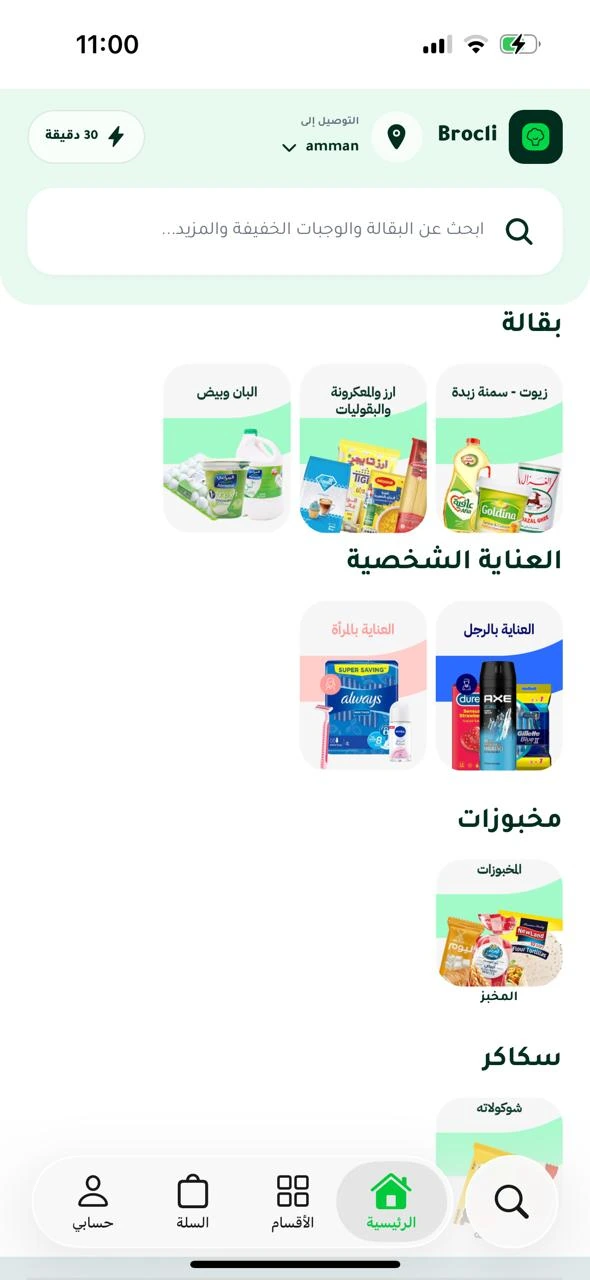
There is no universal answer across branded platforms. Brocli Cloud offers this model through the customer app and management workspaces. That positions the product within the comparison; it does not establish suitability for every business or specialist requirement without review.
When should custom development be considered?
Consider it when a critical workflow is not covered by an appropriate product, or when the operation depends on requirements that cannot reasonably change. First establish the need. What exactly cannot be done? What effect does that have on staff and customers? Is it a lasting requirement or a familiar habit that could be improved without a new function?
Translate the need into observable behaviour. “A flexible dashboard” is not a delivery specification. A more useful description identifies who can change an item, at which stage, and what happens to the order and report afterwards. Exceptional cases expose boundaries that a smooth demonstration can conceal.
Agree review stages rather than waiting for one large final result. What will you examine at each stage? Who accepts it? Which test data will be used? How are new requirements handled? These questions help prevent every discovery from becoming a dispute about implied scope.
Include the period after handover. Who corrects faults, updates components and responds to external service changes? Custom development does not automatically create independence from a supplier. Documentation, access, resources and the agreement determine much of that relationship.
When might an intermediary remain useful?
You may want a channel through which customers discover the store, or a service arrangement you do not intend to operate entirely yourself. Review what the provider actually does and what remains your responsibility, such as product availability, preparation and responses to delays.
Ask how the store appears, who can order, which information and reports you receive, and how complaints and settlements are handled. Those answers may vary by agreement and area. Avoid building the comparison on a general commission figure or an assumed promise of visibility.
If a direct channel also exists, define the role of each. For example, you may examine direct ordering for customers who already know the store while assessing another channel’s role in different demand. This is a planning example, not permission to ignore platform terms or misuse customer data.
Orders arriving through two interfaces do not create two independent inventories. If the stock is shared, establish how the team avoids commitments it cannot fulfil and how it detects and handles discrepancies. The channel strategy and the operating process must be considered together.
How can you make a demonstration useful?
Prepare a basket resembling your store’s orders rather than selecting an ideal, easy case. Include an important pack size, a note the team must read and an address inside coverage. Follow the journey from the customer to preparation and delivery. Do not settle for assurances that each stage exists somewhere else.
Then test an exception: an unavailable item, a ready order with no driver assigned, or a decision awaiting the customer. Ask what information is recorded and who can see it. The software need not automate every practice, but you should know where system behaviour ends and the team’s procedure begins.
Record findings in three groups: demonstrated now, requires configuration or integration, and not yet confirmed. A future plan should not be confused with the current product. Similarly, a design prototype may help explain an idea without proving the function works in an operational environment.
Finish with specific follow-up questions. You may need a product-data sample, information from a POS provider or input from the operations lead. Each next meeting should resolve a defined uncertainty rather than repeat the same feature tour.
What should you ask about data and accounts?
Ask which records you can access, with what permissions and in which export format. Products, orders and movements are not necessarily one flat file. You may need to understand relationships between them. Request an appropriate example rather than accepting a broad ownership statement without a practical way to use the data.
Review account responsibilities for hosting, payments, messaging and publishing where relevant. Do not put credentials or customer records into a general comparison document. Identify who manages access, how it is reviewed and what happens when a staff member or supplier changes.
Discuss backup and restoration separately. A backup existing does not prove every recovery scenario is tested or that a particular restoration time is guaranteed. Ask what can be recovered, who handles the process and how successful recovery is checked.
The binding details depend on the agreement and system. Brocli’s trust centre sets out questions about data and support without inventing availability or response guarantees. Use these questions with every provider, and involve the appropriate specialist when reviewing legal or regulatory obligations.
How do you compare total responsibilities and costs?
Use the same scope, period and assumptions. An initial software price is not directly comparable with a service including ongoing work. A per-order commission is not the whole cost of a direct operation. List what each provider supplies and what the store supplies before comparing totals.
Review identity, data preparation, training, integrations, support and applicable external services. An unexplained line is a question, not a zero. Otherwise, an incomplete offer can appear cheaper simply because work is missing from its description.
Consider foreseeable changes, such as adding a branch, changing a payment provider or introducing a different product type. You do not need to price every future idea, but you should understand the approval, scope and testing process. Some work can wait until the basic operation has been demonstrated.
The app cost guide provides a detailed comparison structure. Choose a proposal you understand and can operate, rather than assuming that the highest price guarantees quality or the lowest price covers everything you need.
How do multiple channels avoid conflicting orders?
Identify the source of product and stock information. When price or availability changes, who updates it and where does it appear? Is there a verified integration or a manual procedure? Both require a clear process, but automatic synchronisation should not be promised before it has been tested.
Decide where the team sees its work. Moving between several interfaces may require a priority method and a way to avoid forgetting an order on a less-used channel. Define what statuses mean across systems. Matching labels do not guarantee that changing one system changes another.
Test concurrent demand on the same quantity, cancellations, returns and changes in only one channel. Use a suitable environment or controlled procedure that avoids unintended charges or customer messages. The purpose is to discover where information can lag and how the team responds.
If POS integration is planned, bring the system name and the relevant technical information or authorised contact. An API existing does not prove that every operation you need is supported or that the two data models align without preparation.
Why does the business type matter beyond branding?
Categories and baskets may look similar while the work behind them differs. Grocery operations need clear units, pack information and shortage handling. Restaurants may need particular meal options and kitchen processes. Pharmacies require review of product and activity requirements by qualified people before an appropriate technical journey is defined.
Changing the logo and opening screen does not establish specialist suitability. Ask to test the workflow that distinguishes your activity. Final-weight settlement is different from an ordinary note; a required meal option is different from presenting another standalone product.
Brocli’s supermarket, restaurant and pharmacy pages distinguish the discussion from confirmed functions. Kitchen systems, prescription uploads and specialist approvals are not assumed capabilities.
Clear limits help you make a better decision than a promise that every activity fits without conditions. A provider should be able to explain where the current product fits and what needs investigation or additional work, even when that answer narrows the initial scope.
Who should participate in the decision?
Include someone who performs the daily task. An owner may focus on reports and price, while a picker notices an unclear unit or a cumbersome transition between orders. Collect comments by task and impact so that a visual preference is not treated as equivalent to a problem preventing essential work.
Different opinions do not require a long unprioritised customisation list. Define the first journey that must work reliably and distinguish launch requirements from later improvements. Record why each priority matters, so a new idea can be evaluated against the same objective.
Bring the people who know existing systems when an integration affects the choice. Sales descriptions alone may not answer questions about data exchange, account access or timing. A focused technical review can clarify those dependencies without making every meeting a detailed engineering session.
The decision should remain connected to the store’s work. Counting features or polishing screens that the team will not use can distract from the small number of behaviours that determine whether an order can be fulfilled correctly.
How do you make a decision that can be revisited?
Write a short decision record: the problem, the option tested, the functions demonstrated, unresolved work, known costs and responsibilities. Explain why alternatives do not fit the current situation, rather than claiming they are wrong for all retailers.
Use three final questions. Can the team perform its essential journey? Do you understand what you pay for and what you operate yourselves? Do you know how changes and exit are handled? If a material answer remains unclear, arrange a specific follow-up rather than collecting more attractive screenshots.
Starting smaller or delaying a purchase can be a reasonable outcome when the operating model is not ready. Reading a selection guide should not commit you to buying a system.
To assess Brocli, arrange a practical demonstration and bring a representative order. The discussion should distinguish current functions, configuration and development, leaving you with a scope you can examine instead of a promise you must interpret later.
What should the first acceptance exercise include?
Use the agreed requirement as the reference, not somebody’s recollection of the sales conversation. Run the normal journey and the exceptions that were essential to selection. Record the result and any remaining question against the relevant requirement.
Keep defects, configuration changes and new ideas separate. A missing agreed behaviour is different from an improvement discovered during use. This distinction makes follow-up clearer for both teams and prevents an unresolved launch requirement from being hidden inside a general wish list.
Acceptance is also a chance to confirm that the store team can work independently. If a demonstration succeeds only when the supplier performs every step, identify the training or access still needed. The useful outcome is a working, understandable process with known boundaries, not merely a completed presentation.
See how this fits your store
Bring your workflow and questions. We will show you the platform and define a proposal for your project.
Discuss your project ↗