
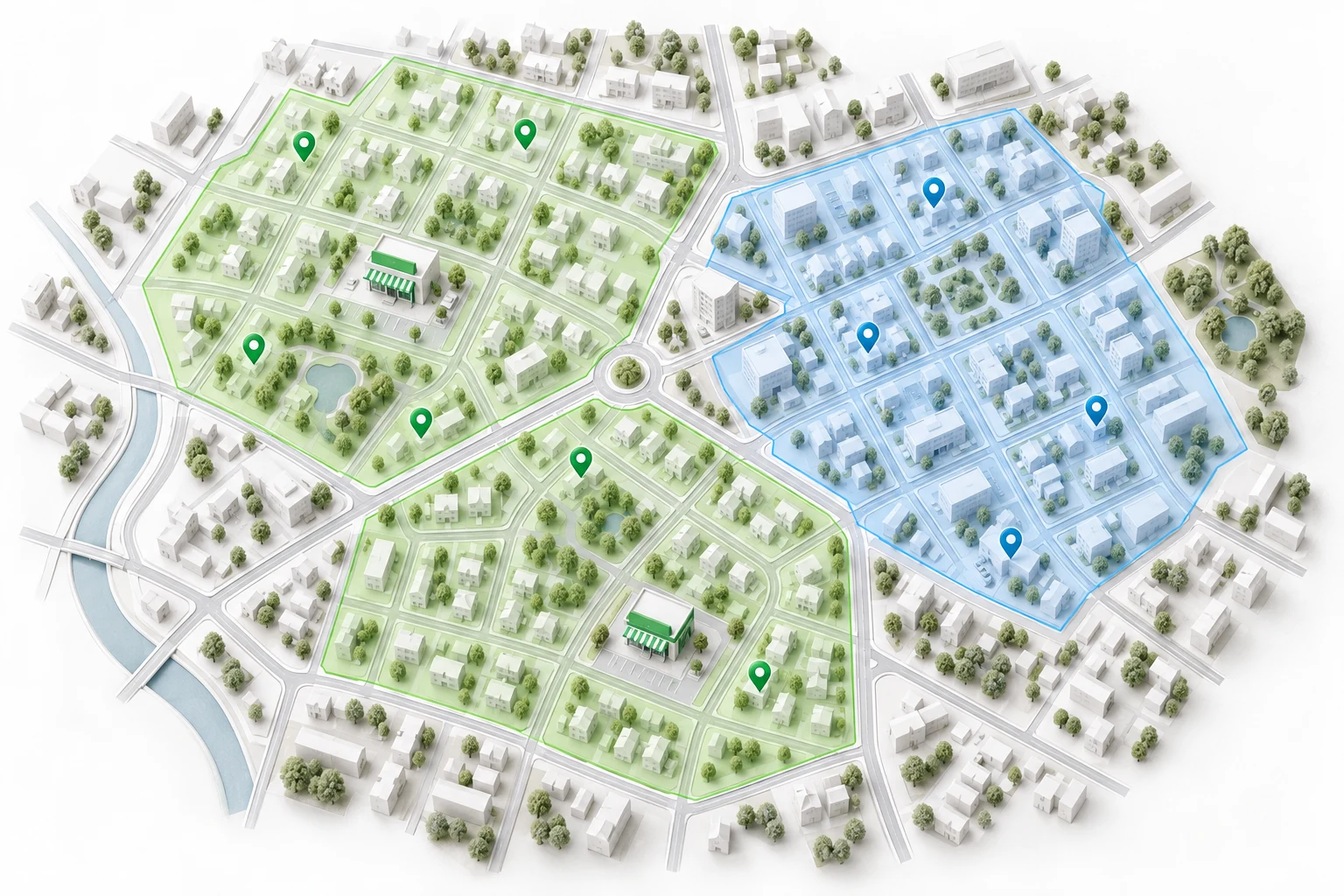
Why is distance alone insufficient?
A nearby address can involve difficult access, congestion or a long handover. Map distance is only part of the journey. The order may also wait inside the store before a driver becomes available.
What should you define for each area?
Document the boundary, delivery charge and estimated service time. Check how addresses at the boundary are handled. Make the customer-facing description consistent with the configuration the team uses.
How do you test coverage?
Try typical destinations and difficult ones during relevant operating periods. Record preparation and travel separately. Your test should identify where the promise becomes unreliable and why, rather than averaging those cases away.
When should the zone change?
Review exceptions after shifts. A repeatedly slow area may need a revised estimate, different dispatch arrangement or smaller coverage. Avoid widening the zone simply because there is room on the map.
What should you verify in the platform?
Ask to see zone drawing, fee configuration and out-of-area handling. Driver assignment and order statuses are separate capabilities from live GPS tracking or automatic route optimisation; require a demonstration for each claim.
See how this fits your store
Bring your workflow and questions. We will show you the platform and define a proposal for your project.
Discuss your project ↗